
Cleanroom Systems
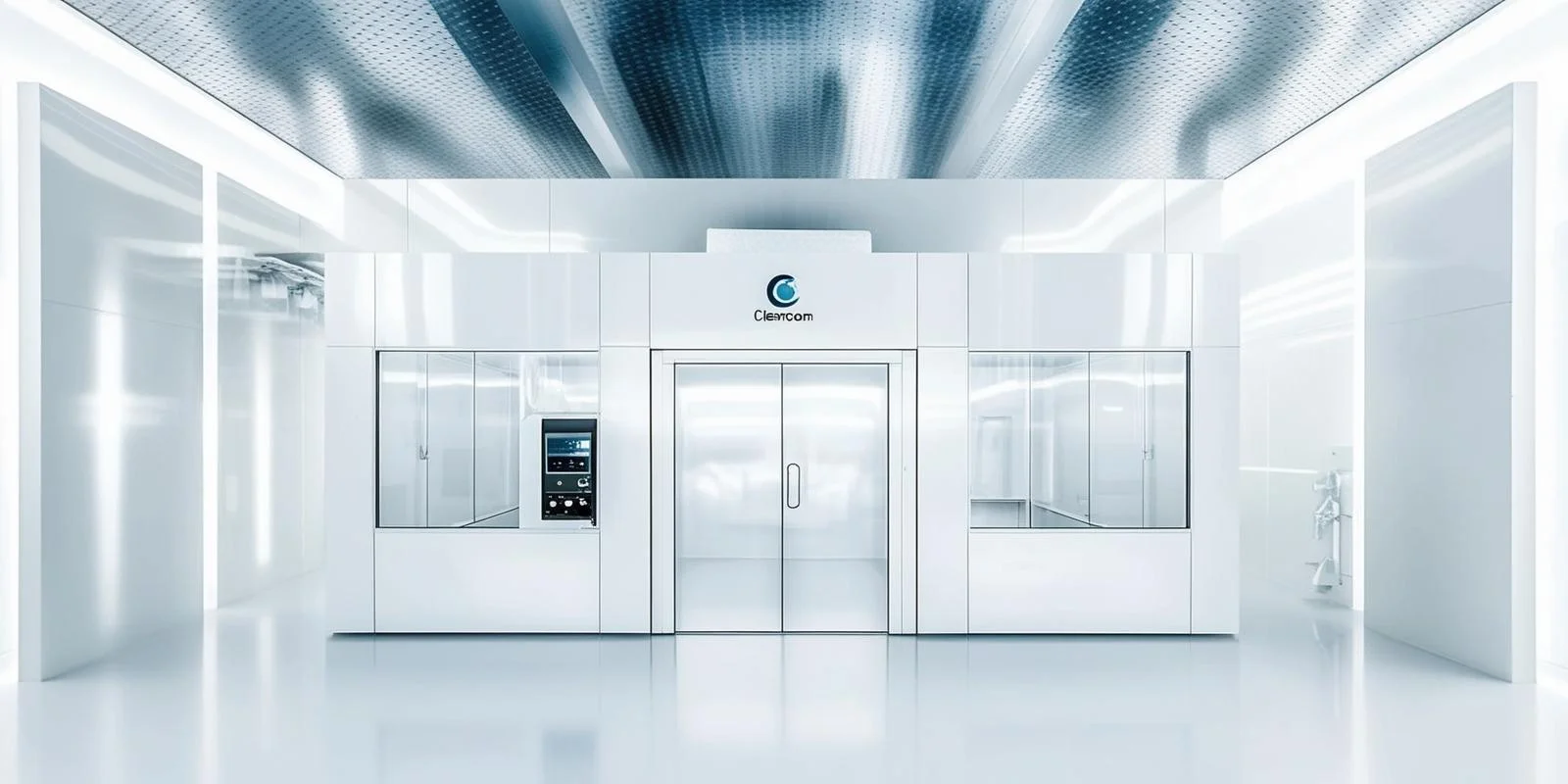
Cleanroom Applications
Cleanrooms are specialized controlled environments designed for manufacturing, research, and other processes that require a high degree of environmental precision. These environments are engineered to maintain, monitor, and record critical physical parameters such as airborne particle concentration, temperature, relative humidity, and pressure within predefined limits. This ensures the conditions required for both product safety and process stability.According to the ISO 14644 standard, cleanrooms are controlled environments in which the concentration of airborne particles is minimized and where the introduction, generation, and retention of particles within the space are controlled. Owing to these characteristics, cleanrooms play a critical role in maintaining product safety and process efficiency. Cleanroom systems are no longer regarded solely as a means of achieving sterility; they have also become a strategic investment in process safety, environmental sustainability, and regulatory compliance.
As industrial manufacturing and healthcare standards continue to evolve, the importance of cleanrooms is increasing steadily. Particularly in industries that require highly sensitive or sterile production conditions, cleanroom solutions have become essential for compliance with national and international regulations. In addition to enabling the manufacture of high-quality products, these systems provide significant advantages in terms of competitiveness, sustainability, and operational safety.
Cleanroom Application Areas
Hospitals and Healthcare Facilities
Cleanrooms are a critical component of modern healthcare infrastructure. In areas requiring stringent contamination control, such as intensive care units, operating theatres, isolation rooms, and chemotherapy drug preparation areas, cleanroom solutions minimize the risk of particulate, microbial, and chemical contamination, thereby supporting the highest levels of patient safety.
Through controlled airflow patterns, positively pressurized environments, and HEPA filtration systems, these solutions contribute significantly to infection control within healthcare facilities.
In addition, providing hygienic and controlled environments through specialized isolation rooms is particularly important in the treatment of patients with conditions such as immunodeficiency. In such applications, cleanroom infrastructure not only helps prevent infections but also contributes directly to the continuity, safety, and effectiveness of treatment processes.
Medical and Healthcare Device Manufacturing
Every component used in the manufacture of medical devices may come into direct or indirect contact with human health. For this reason, production conditions must be carefully controlled with respect to sterility and particulate contamination.
Cleanrooms minimize contamination risks and help maintain product integrity during the manufacture of medical devices such as pacemakers, dialysis sets, implants, and similar products. In environments equipped with HEPA and ULPA filtration systems, even microscopic airborne particles are continuously monitored and controlled.
Each stage of the manufacturing process is monitored in accordance with validation, calibration, and certification requirements. Compliance with medical-device-specific quality standards such as ISO 13485 enhances product reliability and facilitates access to international markets.
Manufacturing within controlled cleanroom environments therefore provides an important safeguard for patient health while also strengthening the credibility and reputation of manufacturers within the industry.
Biotechnology and Pharmaceuticals
Cleanrooms play a critical role in the biotechnology and pharmaceutical industries in terms of product safety, accuracy, and manufacturing efficiency. In the production of antibiotics, intravenous solutions, personalized medicines, and other pharmaceutical products, even minor contamination may compromise product efficacy or render the product unsuitable for use.
For this reason, temperature, relative humidity, pressure differentials, and other environmental parameters are managed with a high degree of precision in clean environments designed in accordance with ISO 14644 classifications.
Cleanrooms used in R&D laboratories and pharmaceutical manufacturing lines are also designed to comply with GMP (Good Manufacturing Practice) requirements. These environments help protect product purity while providing manufacturing conditions recognized by international health and regulatory authorities.
As a result, pharmaceutical products meeting high quality standards can be manufactured safely for both domestic and international markets.
Food Industry
Food production directly affects consumer health and must therefore be carried out under strictly controlled hygienic conditions. Cleanrooms help prevent cross-contamination and microbial contamination in applications such as dairy processing, infant formula production, meat processing, and ready-to-eat food manufacturing.
Maintaining stable particle concentrations, humidity levels, and temperatures within the production environment also contributes to extending product shelf life while supporting food safety.
Clean environments installed particularly within packaging and filling lines help minimize the risk of product deterioration and can provide significant economic advantages for manufacturers.
When integrated with HACCP (Hazard Analysis and Critical Control Points) systems, these controlled environments help maintain food hygiene at high standards while supporting consumer satisfaction and regulatory compliance.
Electronics and Semiconductor Industry
In electronics manufacturing, even microscopic particles can adversely affect product quality and functionality. Cleanrooms used in the production of microchips, integrated circuits, and printed circuit boards are therefore equipped with advanced systems designed to control particulate contamination in accordance with ISO 14644-1 requirements.
These systems also support the management of electrostatic charges, helping reduce the risk of component failure.
Highly efficient automation and environmental control systems maintain stable temperature and humidity conditions, thereby supporting continuity throughout manufacturing processes.
Controlled environmental conditions are also essential during quality control procedures, where accurate data generation and reliable test results depend heavily on consistent and repeatable operating conditions.
Optical and Laser Systems
The performance of optical products is directly dependent on surface quality and light transmission characteristics. Even a very small dust particle may reduce lens performance or impair the precision of a laser system.
Cleanrooms provide highly controlled production environments that minimize surface contamination and help preserve the optical properties of sensitive components. Filtration systems and positively pressurized HVAC solutions prevent airborne particles from entering critical production areas.
Post-production calibration and testing procedures are also carried out under the same controlled cleanroom conditions. This helps ensure high measurement accuracy, reliable product performance, and long service life.
Cleanroom systems also provide significant advantages in protecting the specialized materials used in optical and laser applications.
Automotive Industry
Environmental control is critically important in the automotive industry, particularly during the production and assembly of electronic components.
Cleanroom systems enable high-precision manufacturing of components with tight tolerances. During the production of electronic control units, sensors, batteries, charging systems, and other technologically advanced components, the elimination of external factors such as dust and humidity plays a critical role in maintaining product quality, functionality, and safety.
Stable temperature and humidity conditions are also required for the manufacture of optically sensitive components such as instrument panels and interior display systems.
By maintaining these environmental conditions, cleanrooms help reduce production defects, improve quality standards, and enhance customer satisfaction.
Plastics Manufacturing Industry
In plastic injection moulding and thermoforming processes, production environments must be carefully controlled in order to maintain material and product quality.
Cleanroom environments are particularly important in the manufacture of medical equipment, laboratory consumables, and products subject to stringent hygiene requirements. They help eliminate cross-contamination risks and provide a controlled framework for quality assurance.
They also help prevent defects such as surface deformation, colour variations, and dimensional or form inconsistencies.
In addition to auxiliary products manufactured for the healthcare industry, the plastics sector also produces products intended for kitchens and general living environments.
Cleanroom conditions help maintain hygienic production throughout each stage of manufacturing and facilitate compliance with certification requirements applicable particularly to food-contact and medical-use products.
Aerospace Industry
In aerospace applications, manufactured components must meet extremely high standards of both functionality and safety.
Even microscopic particulate contamination may create significant risks for aircraft or spacecraft components. Cleanrooms are therefore essential for the production and assembly of sensitive systems such as aerospace electronics, radar equipment, and engine components.
Testing of electrical systems, management of static electricity during assembly, and rigorous control of particulate contamination within production environments directly influence system reliability.
The use of cleanrooms in these applications is also important for meeting quality certification requirements and applicable international aerospace standards.
Defence Industry
Manufacturing systems and components for the defence industry requires stringent security, quality, and environmental control standards.
During the manufacture of electronic equipment such as radar, communication, and GPS systems, external factors including electromagnetic interference, dust, and humidity must be carefully controlled to maintain product performance.
Cleanrooms provide appropriate controlled environments for the production of such equipment and contribute significantly to overall system reliability.
High-precision assembly of optical devices, sensors, missile components, and other critical defence equipment may also require Class 100 or higher-level cleanroom conditions, depending on the application and process requirements.
Such controlled environments help minimize manufacturing defects while improving the reliability and safety of systems intended for mission-critical applications.
Testing and Research Centres
The accuracy of experimental work carried out in R&D and quality control laboratories depends heavily on the stability of environmental conditions.
Cleanrooms provide environments in which particle concentration, temperature, and humidity are carefully controlled and where experimental processes can be isolated from external influences.
This enables chemical reactions, microbiological analyses, physical measurements, and other critical tests to be performed with a high degree of accuracy.
Special-purpose controlled environments, including climatic test chambers, are also used to evaluate product performance under challenging environmental conditions.
Cleanroom and environmental control systems enable these facilities to generate repeatable and standardized test results, thereby supporting reliable product certification processes.
Cosmetics Industry
Strict hygiene and contamination control are essential during the formulation and manufacture of cosmetic products.
Creams, serums, lotions, and other products that come into direct contact with the skin must be protected against microbial contamination throughout the production process.
Cleanrooms allow manufacturing operations to be carried out under controlled conditions compliant with GMP requirements, from formulation through to filling and packaging.
Easy-to-clean surfaces, antibacterial materials, and advanced air filtration systems also contribute to longer product shelf life and support the delivery of safer products to consumers.
Manufacturing in cleanroom environments provides an additional advantage in meeting national and international regulatory requirements and helps cosmetic brands fulfil applicable quality and legal obligations.
Cleanroom Air Quality and Environmental Control
Cleanroom performance is directly related to the concentration of airborne particles within the controlled environment.
To achieve and maintain the required cleanliness classification, testing, measurement, and calibration procedures are critically important both during commissioning and throughout subsequent operation.
Cleanroom air quality is maintained through the following key parameters:
Particle Concentration: One of the most critical parameters in cleanroom design. The required air change rate must be calculated in accordance with the target cleanroom classification. In environments requiring very high levels of cleanliness, air change rates of up to 120 air changes per hour may be required.
- Pressure Control: Airflow within a cleanroom should generally be directed from cleaner areas towards less clean areas. For this reason, cleanrooms are commonly maintained under positive pressure relative to adjacent spaces.
- Temperature Control: The required temperature range should be determined according to the process being performed. For example, operating theatres require carefully controlled temperature conditions to support both clinical procedures and patient thermal comfort.
- Humidity Control: Relative humidity is important for both manufacturing processes and personnel comfort. Humidity levels must also be optimized to control electrostatic charge, prevent undesirable chemical reactions, and support sterilization and other process requirements.
Cleanroom Ventilation Systems
The environmental control mechanisms required in cleanrooms vary depending on the specific application and process requirements.
However, the following criteria should generally be considered during design and implementation:
- Contamination Control Strategy: Filtration and airflow systems should be designed according to the required level of particulate and contamination control.
- Material Quality: Construction materials should be non-particle-shedding, durable, and easy to clean.
- Energy Efficiency: Ventilation and HVAC systems should operate at high efficiency while optimizing long-term operating costs.
- Personnel Health and Comfort: Air quality, temperature, and humidity levels should be maintained within suitable ranges to support employee health, comfort, and productivity.
- Safety and Ease of Maintenance: Systems should be designed for efficient maintenance and servicing, while allowing rapid intervention in the event of malfunction or failure.
High-Standard Cleanroom Solutions
Cleanroom technologies are among the strategic infrastructure investments required to meet the quality, hygiene, and safety expectations of modern industries.
Equipped with advanced filtration technologies, precision HVAC systems, and specialized architectural systems, these controlled environments provide maximum process control and sustainable operational efficiency for critical applications.
At YKP TECH, we continue to serve as a reliable engineering partner by designing and implementing cleanroom solutions tailored to the specific requirements of your industry and manufacturing processes, addressing both current operational needs and future demands.
For expert support in cleanroom needs assessment, consultancy, engineering design, and implementation, you can contact YKP TECH engineers and establish your projects on a reliable technical foundation with solutions tailored to your industry.
